
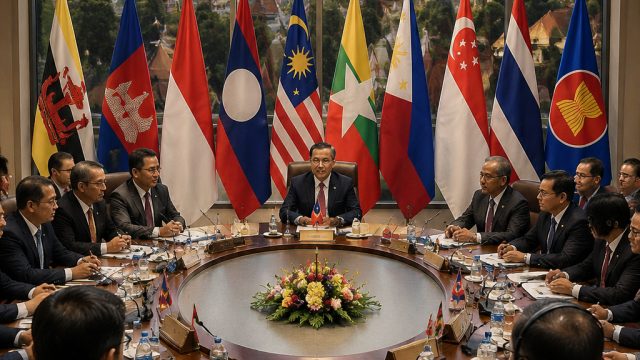
ASEAN's Strategic Shift: Engaging Myanmar for a Unified Future
As the geopolitical landscape in Southeast Asia continues to evolve, the Association of Southeast Asian Nations (ASEAN) is recalibrating its approach to Myanmar. With a critical period ahead for federal Myanmar, this engagement could play a pivotal role in shaping the region's stability and unity.
The Necessity of Engagement
The ongoing crisis in Myanmar, marked by political turmoil and humanitarian concerns, necessitates a strategic response from ASEAN. The organization aims to foster dialogue and cooperation amidst the complexities of the situation. Recent initiatives suggest a renewed commitment to engaging Myanmar in a constructive manner, focusing on peace and stability.
Understanding ASEAN's Role
ASEAN has historically served as a platform for dialogue among its member states, promoting cooperation and conflict resolution. However, the recent developments in Myanmar require a more hands-on approach. Here are some key reasons for ASEAN's increased engagement:
- Promoting Stability: Instability in Myanmar can have far-reaching effects on the region, making it imperative for ASEAN to act.
- Enhancing Dialogue: Establishing channels of communication with Myanmar’s leaders can foster understanding and pave the way for negotiations.
- Facilitating Humanitarian Aid: ASEAN can play a crucial role in coordinating humanitarian assistance to the people affected by the crisis.
Recent Diplomatic Efforts
In recent months, ASEAN has ramped up its diplomatic efforts to engage with Myanmar. This includes high-level meetings with representatives from the Myanmar government, as well as efforts to include civil society voices. Such inclusivity is essential for a comprehensive approach to resolving the conflict.
Key Initiatives and Achievements
Some notable initiatives include:
- Peace Talks: ASEAN has facilitated peace talks involving various stakeholders to address the underlying issues fueling the conflict.
- Support for Democracy: The organization is advocating for a return to democratic governance, emphasizing the importance of elections and civic participation.
- Human Rights Monitoring: ASEAN is working to establish a framework for monitoring human rights conditions in Myanmar, aiming to hold the government accountable.
The Future of Federal Myanmar
The long-term prospects for a federal Myanmar hinge on the success of these engagements by ASEAN. There is potential for significant progress if all parties commit to dialogue and reforms. A unified approach is essential for ensuring that Myanmar can navigate its challenges and emerge as a stable member of the ASEAN community.
Challenges Ahead
Despite these optimistic developments, several challenges remain:
- Internal Divisions: The political landscape in Myanmar is deeply fragmented, making consensus-building difficult.
- International Pressure: External influences and sanctions complicate ASEAN's ability to mediate effectively.
- Trust Deficit: Rebuilding trust among different factions within Myanmar will take time and effort.
Conclusion: A Path Forward
ASEAN's renewed engagement with Myanmar represents a significant step towards addressing the ongoing crisis within the country. As the organization navigates complex diplomatic waters, its commitment to fostering dialogue and cooperation can potentially reshape the future of federal Myanmar and contribute to regional stability. It is imperative for ASEAN to continue its efforts with a focus on inclusivity and long-term vision, ensuring that all voices within Myanmar are heard in the path toward recovery and unity.
